TFA-01 | Nonsteroidal drug development for canine osteoarthritisView development progress

TFA-01 DEVELOPMENT

TFA-01: an investigational program for canine osteoarthritis

TFA-01 explores Antcin A’s potential as an anti-inflammatory drug, with canine osteoarthritis as the lead indication. Safety studies, investigational injectable formulation development, CMC, and third-party research are advancing together to build the regulatory evidence base.

TFA-01 · CANINE OA
TFA-01 · CANINE OA

LEAD PROGRAM · TFA-01

Canine OA: Our lead development program

TFA’s initial commercial focus is companion animal health, with canine OA offering measurable pain and mobility outcomes. Formal studies will evaluate efficacy, repeat-dose safety, dosing, and treatment duration.

Target indication
Canine osteoarthritis
Candidate molecule
Antcin A
Development category
Veterinary drug
Commercial status
Not approved

TFA-01 DEVELOPMENT TIMELINE

Development milestones

Entries appear in reverse chronological order and identify the date type, development workstream, progress and supporting evidence. Each entry distinguishes completed work, initiated projects and public disclosures.

View the full development timeline

TFA-01 DEVELOPMENT FRAMEWORK

TFA-01 progress across five development workstreams

Each section presents the foundation already in place, work underway and the next verifiable milestone. The five workstreams are connected; progress in one addresses a specific development risk but does not mean the product is approved.

01

Molecule, mechanism & rights

Published research foundation / program validation underway

Published studies support GR/GRα-related signaling by Antcin A in defined models. TFA is assessing how those findings apply to its current test articles, batches and canine OA development program.

Next milestoneComplete candidate test-article and batch definition and strengthen program-level pharmacology relevant to canine osteoarthritis.View progress details
02

CMC & controlled supply

Sourcing foundation in place / specifications and batch bridging underway

Research on strains from multiple sources and their Antcin A content supports controlled cultivation, strain selection, purification, analytical testing and formulation development.

Next milestoneComplete physicochemical validation of the nanoformulation, then advance formal specifications, batch consistency and process scale-up.View progress details
03

Safety & toxicology

Preliminary 14-day repeat-dose study completed | Formal studies advancing

A 14-day repeat-dose preliminary toxicology study in female rats is complete and a report is available to inform later study design. The Graduate Institute of Animal Vaccine Technology is advancing target-animal safety, toxicology, residue and formulation-related research.

Next milestoneComplete the subsequent regulatory toxicology reports and establish the safe dose range for the purified candidate drug substance and final product under this development program.View progress details
04

Canine OA clinical development

First-stage agreement signed / preliminary cell testing underway

TFA completed uncontrolled exploratory observations in 15 dogs. The first-stage canine osteoarthritis research agreement has been signed, and preliminary cell-based testing is underway ahead of a standardized study.

Next milestoneComplete the canine OA study under a protocol with prespecified endpoints and a statistical analysis plan, and prepare the study report.View progress details
05

Regulatory strategy & commercialization

Taiwan advancing / U.S. CVM planning

TFA is assembling data for a veterinary drug application in Taiwan and planning its U.S. CVM strategy. Partnership and licensing opportunities will be evaluated as the supporting data develop.

Next milestoneObtain regulatory feedback on study design, process specifications and remaining data gaps, then develop a submission plan.View progress details
Antcin AAntcin A · 3D structure
PubChemComputed conformer
Schematic of the Antcin A molecular structure

Preparing interactive model

CarbonOxygen
Drag to rotate · Scroll to zoom
Use arrow keys to rotate and + / − to zoom.
Model data

This model uses a computed conformer from PubChem (NCBI/NLM/NIH), CID 10004121; CAS 163597-24-8, molecular formula C₂₉H₄₂O₄. The source record does not specify the stereochemistry at C25; this view shows one computed conformer. PubChem ↗

01 · Molecule, mechanism & rights

Antcin A is the starting point for drug development

Published studies support GR/GRα-related signaling by Antcin A in defined models. TFA is assessing how those findings apply to its current test articles, batches and canine OA development program.

Published research foundation / program validation underway

Candidate
TFA-01
Core molecule
Antcin A
Chemical class
Nonsteroidal triterpenoid
Current stage
Investigational
Cooperation and licensing framework

Under the publicly filed June 2026 agreement, TFA holds exclusive worldwide rights to develop, commercialize and license the Antcin A platform; ownership of the platform assets remains with the rights holder named in the agreement.

SEC 6-K
MECHANISM SCHEMATIC

Antcin A-induced GR nuclear translocation

GRα
GR enters nucleus
A 2011 cell study observed Antcin A-induced GR nuclear translocation.Schematic of a published finding; it does not establish direct binding or clinical efficacy.
01

Foundation in place

TFA-01 is centered on Antcin A. Published studies provide mechanistic signals from cell, computational and preclinical models, while global platform rights are exercised under the publicly filed cooperation and licensing structure.
02

Work underway

TFA is evaluating how published findings relate to current TFA-01 test articles and batches, while building translational pharmacology data relevant to canine osteoarthritis.

03

Next milestone

Complete candidate test-article and batch definition and build a program-specific pharmacology package for later safety and clinical work.

Evidence limitations

Available studies do not establish direct biochemical binding between Antcin A and GR, canine or human clinical efficacy, program-specific pharmacokinetic parameters, or drug approval.

02 · CMC CORE ADVANTAGE

CMC links controlled sourcing to consistent product quality

A molecule from a natural source must be consistently sourced, identified, purified and produced to specification. TFA integrates cultivation, screening, analysis, purification, specification development and batch bridging within its CMC program.

TFA CMC CORE

TFA is building on its access to Antcin A to establish an integrated quality-control system spanning strain selection, cultivation, content testing, purification and batch traceability.

Sourcing foundation in place / specifications and batch bridging underway

TFA-HPF™ · Hyphal Pairing & Fusion

Developing strains with high Antcin A yields

HPF provides strains for ongoing cultivation and research. It supports TFA’s supply capabilities alongside cultivation processes, quality analysis and downstream processing.

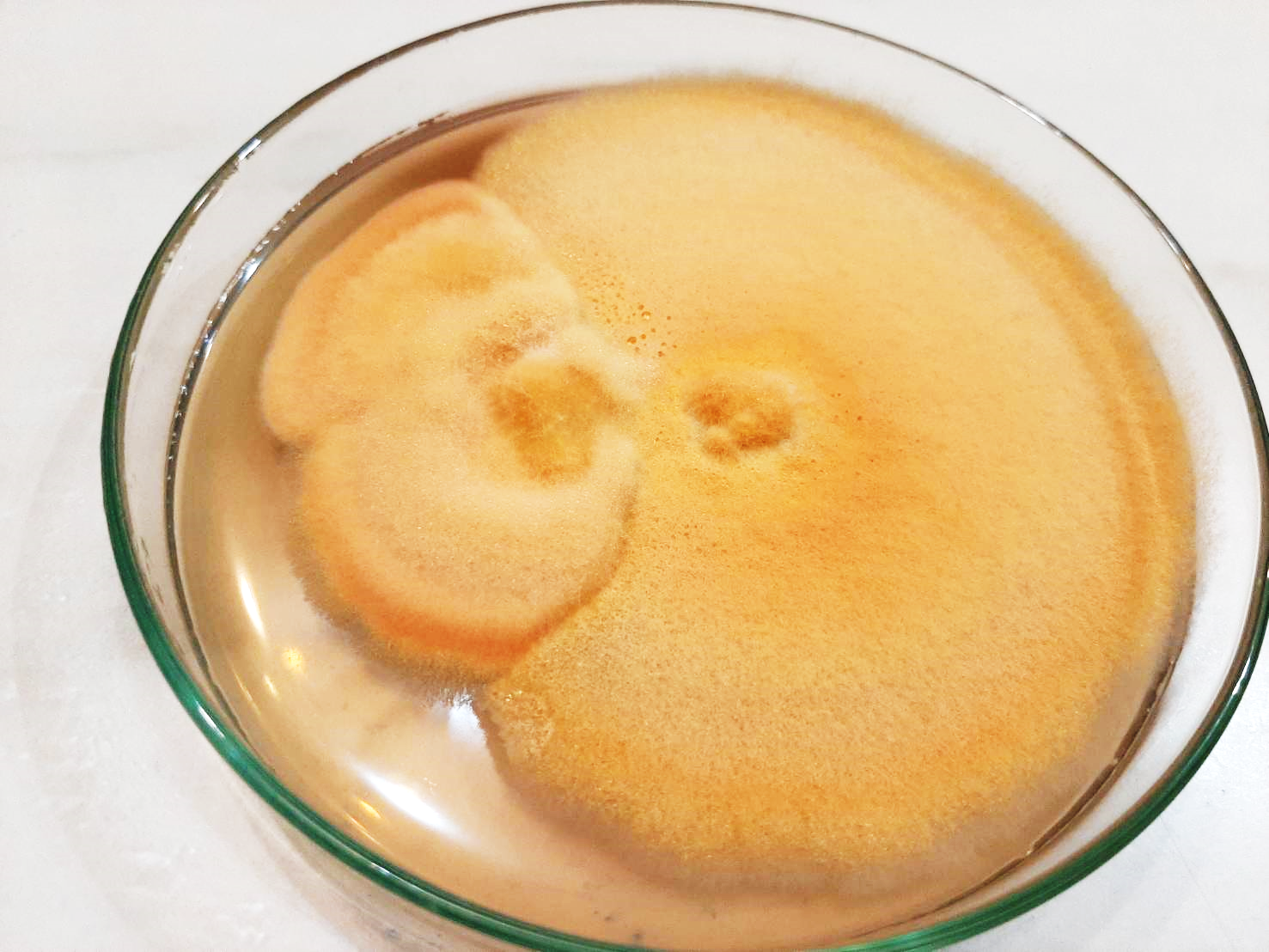
Hyphal pairing & fusion schematicTFA-HPF™
HPF Petri dish image showing contact between multiple mycelial colonies
Hypha 1Hypha 2Hypha 3
Fusion bridges
01Hyphal Pairing & Fusion

Establish compatible hyphal pairings as the starting point for strain development.

Actual culture-plate photo; numbers and animation illustrate hyphal pairing and fusion.

HPF and the cultivation patents in four jurisdictions are presented separately. The granted patent claims define the scope of protection.

CMC PROCESS SCHEMATIC

From source control to scale-up validation

TFA-HPF™ → CMC
Scale-up validation
An integrated CMC workflow connects source control, cultivation and screening, purification and analysis, specification setting and batch management, and scale-up validation.Conceptual schematic; formal specifications, batch consistency and GMP validation will follow the development program.
CURRENT TAIWAN SUPPLY BASEApprox. 2.5 kg / year

Making a scarce material available for planned R&D

Based on current cultivation capacity in Taiwan and internal assumptions, TFA estimates approximately 2.5 kg of Antcin A content per year within cultivated material. This estimate supports supply planning across multiple batches and development stages; it is not a measure of purified drug-substance output.

  • Parallel R&D workstreams
  • Cross-batch data accumulation
  • Greater control of supply
  • A base for later process scale-up
Internal baseline estimate as of August 2026, expressed as annual Antcin A content equivalent within cultivated material. Detailed calculations and assumptions are available under NDA.

WHY KILOGRAM SCALE MATTERS

From research samples to sustained development

Repeated preparation, batch comparison, specifications and scale-up are what can turn a rare molecule into a drug-development asset.

Kilogram-scale supply can reduce R&D interruptions caused by shortages
01Batches can be compared

From one success to reproducibility

Build analytical methods, batch-consistency data and retention-sample management instead of relying on a single sample result.

02R&D can run in parallel

From an isolated study to integrated development

Plan purification, formulation, stability, toxicology and CMC from a shared material base, reducing waits between stages.

03Development can continue

From an obtainable sample to a scalable platform

A repeatable, traceable supply chain is an important foundation for later GMP transition, clinical development and licensing.

THREE REFERENCES FOR SUPPLY SCALE

Three reference points explain the value of supply capability

02 | DRUG-SCALE REFERENCE1 mg / vial

Some approved drugs are supplied in milligram-strength vials

The official DailyMed label for FDA-approved YONDELIS® (trabectedin) states that each single-dose vial contains 1 mg. This illustrates the milligram-scale finished-product strength of one high-potency drug.

Official DailyMed label | Updated January 6, 2026
NATURAL-PRODUCT SUPPLY PRECEDENT | PACLITAXEL500 → nearly 29,000

Supply capability is itself R&D infrastructure

NCI reports that supply constraints slowed early paclitaxel development. After a collaborator established sufficient supply, participation in NIH-related trials grew from about 500 people in 1989 to nearly 29,000 in 1998, showing why natural-product development needs scalable supply.

U.S. National Cancer Institute | Taxol - A Success Story
Estimation basis and important context

Approximately 2.5 kg per year is TFA’s unaudited internal estimate, as of August 2026, of the Antcin A content equivalent within cultivated material, based on current cultivation capacity in Taiwan and internal assumptions. It is not actual output, GMP-released drug substance, saleable inventory or a supply commitment. External 1 mg list prices illustrate research sourcing costs; the YONDELIS® example illustrates a labeled finished-drug strength; and TFA’s estimate provides a basis for supply planning. These references should not be combined to infer selling prices, finished-dose counts, revenue or valuation.

PUBLIC CMC PROGRESS

From controlled sourcing to verifiable specifications

Foundation in placeWork underwayNext milestone
01Foundation in place

Controlled cultivation

Technical foundation
02Foundation in place

Strain selection and Antcin A testing

Research foundation established
03Work underway

Strain & process optimization

Continuing
04Work underway

Purification & analytical methods

In progress
05Work underway

Nanoformulation development

In development
06Next milestone

Specifications & scale-up validation

Next milestone
FORMULATION WORK

Nanoformulation development

The Graduate Institute of Animal Vaccine Technology is conducting nanoformulation research aimed at improving the dispersion of lipophilic Antcin A in water, laying the groundwork for development of an injectable formulation.

Feasibility and physicochemical validation underway

Aqueous solubility, clarity, particle size, uniformity and stability remain to be validated. A final dosage form or submission-ready formulation specification has not been established.

Controlled cultivation and sourcingStrain screening and composition analysisNanoformulation developmentCultivation IP in four jurisdictions

The public site describes the scale and focus of the research. Strain IDs, individual content measurements, cultivation parameters, selection criteria and purification conditions are available in confidential due diligence materials.

03 · Safety & toxicology

Safety & toxicology

A 14-day repeat-dose preliminary toxicology study in female rats is complete and a report is available to inform later study design. The Graduate Institute of Animal Vaccine Technology is advancing target-animal safety, toxicology, residue and formulation-related research.

Preliminary 14-day repeat-dose study completed | Formal studies advancing

01

Foundation in place

The company completed a 14-day preliminary TF-15 toxicology study in 24 female rats and holds the report, which can inform dose selection and design for later formal studies.

02

Work underway

The Graduate Institute of Animal Vaccine Technology is conducting target-animal safety, toxicology, residue and nanoformulation research that must be bridged to current TFA-01 test articles and batches.

03

Next milestone

Complete the subsequent regulatory toxicology reports and establish the safe dose range for the purified candidate drug substance and final product under this development program.

Evidence limitations

The preliminary screen was not GLP regulatory toxicology or a long-term safety study. It does not establish canine safety, long-term safety, or the safety of purified Antcin A or a final product.

04 · Canine OA clinical development

Canine OA clinical development

TFA completed uncontrolled exploratory observations in 15 dogs. The first-stage canine osteoarthritis research agreement has been signed, and preliminary cell-based testing is underway ahead of a standardized study.

First-stage agreement signed / preliminary cell testing underway

01

Foundation in place

The exploratory observations in 15 dogs provide practical experience that can inform the design of later standardized studies.

02

Work underway

The first-stage research agreement for TFA-01 in canine osteoarthritis has been signed. Preliminary cell-based testing and study preparations are underway; subsequent assessments, records and reports will follow the study protocol.

03

Next milestone

Complete the canine OA study under a protocol with prespecified endpoints and a statistical analysis plan, and prepare the study report.

Evidence limitations

The 15-dog internal exploration was not a regulatory study and lacks verifiable formal start and end dates, a full protocol, prespecified endpoints, statistical analysis and a signed report. It does not establish efficacy, safety, equivalence or superiority. Launching the later research collaboration is not the same as study completion or a new conclusion.

A veterinary care network in Beijing completed exploratory observations in 15 dogs, documenting changes in mobility before and after treatment. Prior experience with corticosteroid treatment serves only as background context; the observations were not a concurrently controlled study.

Explore the methods used in the 15-dog observations
15

Exploratory observations in Beijing

Mobility changes recorded before and after treatment

Day 7 / 14

Mobility follow-up

Findings inform the design of subsequent formal studies

Background

Prior care experience

No concurrent corticosteroid control group

Phased Research Plan

Regulatory evidence first, then comparisons and new indications

TFA has engaged a third-party research organization to conduct canine osteoarthritis research. Traceable records, assessments and reports at each stage will inform subsequent decisions.

Stage 1 · Contract Signed

Studies to support regulatory submissions

Evaluate dosing, treatment duration, and changes in pain and mobility under the study protocol, while collecting preliminary safety and tolerability data.

Stage 2 · Planned, Depending on Initial Results

Comparison with existing treatments

Plan studies comparing TFA-01 with representative existing therapies to evaluate outcomes and appropriate treatment settings.

Stage 3 · Separate Validation

Additional indications

Evaluate additional indications, including feline chronic gingivostomatitis and dermatitis, and build a separate evidence base for each.

05 · Regulatory strategy & commercialization

Regulatory strategy & commercialization

TFA is assembling data for a veterinary drug application in Taiwan and planning its U.S. CVM strategy. Partnership and licensing opportunities will be evaluated as the supporting data develop.

Taiwan advancing / U.S. CVM planning

TAIWAN

Taiwan regulatory pathway

Assembling CMC, safety and canine osteoarthritis data for the Taiwan veterinary-drug pathway.

UNITED STATES

U.S. FDA CVM

Planning the data-gap review, advisory support and agency communication strategy.

PARTNERSHIPS

Partnerships & commercialization

Evaluating regional licensing, co-development and manufacturing as evidence matures.

01

Foundation in place

TFA has established a cross-market rights and cooperation framework and is organizing development data around Taiwan’s veterinary-drug pathway.

02

Work underway

TFA is bringing CMC, safety and canine osteoarthritis data together for regulatory review, while planning advisory support and communications with U.S. CVM.

03

Next milestone

Obtain regulatory feedback on study design, CMC specifications and remaining data gaps, then develop a submission plan.

Evidence limitations

Regulatory acceptance of the data, acceptance of the application for review, drug approval, launch timing and commercial outcomes remain uncertain.

PLATFORM EXPANSION

Evaluating inflammatory conditions beyond canine osteoarthritis

LEAD PROGRAM

Canine osteoarthritis

The current primary development focus for TFA-01.

EXPLORATORY RESEARCH PLANNING

Dermatitis

One potential future veterinary indication for evaluation.

EXPLORATORY RESEARCH PLANNING

Feline stomatitis

A future research opportunity subject to scientific and clinical review.